
Case Study
Marketing
Technology
Making the difficult easy
An original product might weigh a ton, require complex heavy-duty logistics, or simply be too valuable for a trade show. You can still capture its impact, however, with a detailed, lightweight, and presentation-ready 3D-printed exhibit.
When your strongest product becomes your biggest logistics problem
Large machines, engines, gearboxes, turbines, and technical systems have a powerful presence. They represent performance, precision, and engineering excellence. At a trade show, these products can become the centerpiece of a booth—in theory, at least. In practice, the reality check often begins before the first day of the show.
The original is too heavy. It is too large, too fragile, or too valuable. Transporting it requires special vehicles, cranes, heavy-duty flooring, or complex permits. Setting it up ties up personnel, time, and budget. Sometimes the product can only be shown in part; sometimes, for safety reasons, it has to stay home entirely.
But a trade show booth without the central product is like a stage without a lead actor. Renderings, videos, and displays can explain technical concepts, but they cannot replace the spatial presence of a real object. Visitors want to grasp scale, walk around shapes, discover details, and immediately understand what is being discussed.
This is exactly where large-format 3D printing comes in. We transform hard-to-transport original products into lightweight, realistic, and trade-show-ready exhibits. They look convincing, fulfill the desired presentation purpose, and are significantly easier to transport, set up, and reuse.
Our services
01
3D model creation
02
Large format 3D printing
03
Assembly & painting
Project process
In a nutshell: What is a 3D-printed trade show model?
A 3D-printed trade show model is a physical replica of a product, component, or technical system, specifically crafted for presentation, sales, exhibition, or training purposes. It can be created in full scale, scaled down, or intentionally enlarged. Depending on the goal, external shapes, technical details, cross-sections, moving components, viewing windows, mounts, or labels can be integrated.
The decisive difference from the original lies not in the impact, but in the effort. A good exhibit conveys the form, dimension, and technical message of the product without the full weight, material value, or logistical requirements. Tons become portable. Inaccessible becomes tangible. A digital file becomes a physical sales conversation.
Creative Polymer does more than just the printing. We approach the trade show object as a complete solution: from checking and preparing the 3D data to segmentation and production, through to assembly, finishing, painting, bases, mounts, and transport crates.
Why lightweight product replicas are so effective at trade shows
Less weight, less logistics
The most obvious argument is weight. The lighter an exhibit is, the easier it is to transport, handle, and set up. Often, a significant portion of heavy-duty logistics is eliminated. The object can be moved by a smaller team, positioned faster, and integrated more flexibly into the booth layout. Even for rotating trade shows, roadshows, or international deployments, this advantage grows with every transport.
The technical impact remains intact
Lightweight does not mean arbitrary. The key is determining which features are relevant to the client and their visitors. Striking geometries, connections, lines, contours, surfaces, and color zones can be implemented so that the model is immediately recognizable as the product in question. The replica fulfills exactly the purpose it is intended to serve at the trade show: explaining, impressing, sparking conversations, and making expertise visible.
The exhibit can show more than the original
A replica does not have to slavishly adhere to every limitation of the real product. It can be intentionally optimized for presentation. Viewing windows make the interior visible. Removable sections explain functions. Cutaway models show hidden components. Individual assemblies can be color-coded or enlarged. In this way, a mere copy becomes a didactic tool for sales and communication.
Safety and booth planning become easier
A multi-ton original places different demands on floor load, anchoring, and setup than a lightweight trade show model. Through project-specific design, the center of gravity, segmentation, base, and mounts can be planned early on. The result is an object that not only looks impressive but can also be used safely and effectively in the intended environment.
An exhibit can be used again and again
High-quality trade show models are not disposable decorations. With proper construction, a robust finish, and well-designed packaging, they can be used at multiple trade shows, in showrooms, during client meetings, for training sessions, or at press events. This turns the exhibit into a mobile building block for product communication.
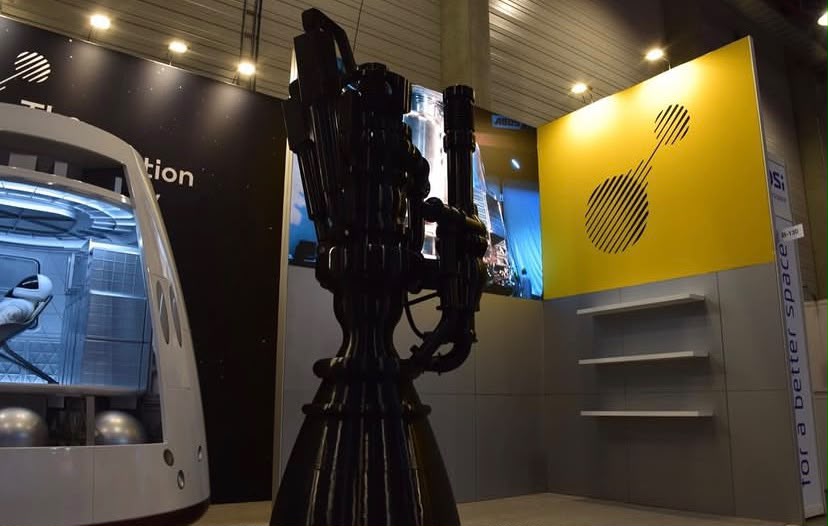
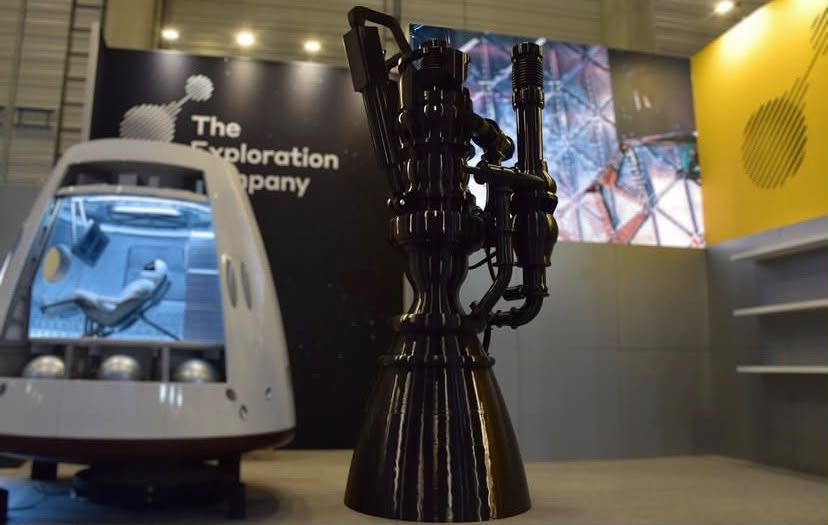
Key example: A rocket engine for ILA Berlin
Hardly any product illustrates the concept of "turning heavy into light" better than a rocket engine. A real engine is technically highly complex, safety-critical, valuable, and only available for a trade show with significant effort. At the same time, it possesses enormous visual power. Its pipes, chambers, transitions, and proportions convey engineering prowess and space travel at first glance.
For The Exploration Company, we were tasked with creating a vivid, full-scale trade show model of the "Storm" engine using large-format 3D printing. Storm is a European rocket engine program for modern space propulsion. The engine is designed to run on liquid oxygen and bio-methane, is intended for reusability, and is expected to deliver up to 180 tons of thrust at sea level. Technically, the program is based on a sophisticated full-flow staged combustion cycle.
The Storm engine was presented to the public for the first time as a full-scale model at ILA Berlin. Our task was to create a physical exhibit from digital data that would make the program's dimensions, technical architecture, and futuristic nature immediately visible.

From dataset to full-scale model in eight days
We had only eight days for the entire implementation. During this period, we had to verify data, plan components, organize printing processes, manufacture segments, prepare surfaces, and finalize the exhibit. To reliably meet this deadline, we pooled our manpower, parallelized work steps, and added extra shifts.
Especially with a rocket engine, it is not enough to simply print a large shape. Visual credibility comes from the technical architecture: pipes, transitions, volumes, and proportions must work together. The model had to be robust enough for trade show operations, precise enough for presentation, and impressive enough for an international audience.
The finished trade show model made a technology tangible that cannot easily be presented in its original form at a standard trade show booth. Visitors could immediately grasp the dimensions, examine details, and understand what The Exploration Company is working on. This is exactly what technical trade show models are for: they translate highly complex developments into an object that can be seen, explained, and remembered.
Second example: Turning one ton into around 48 kilograms
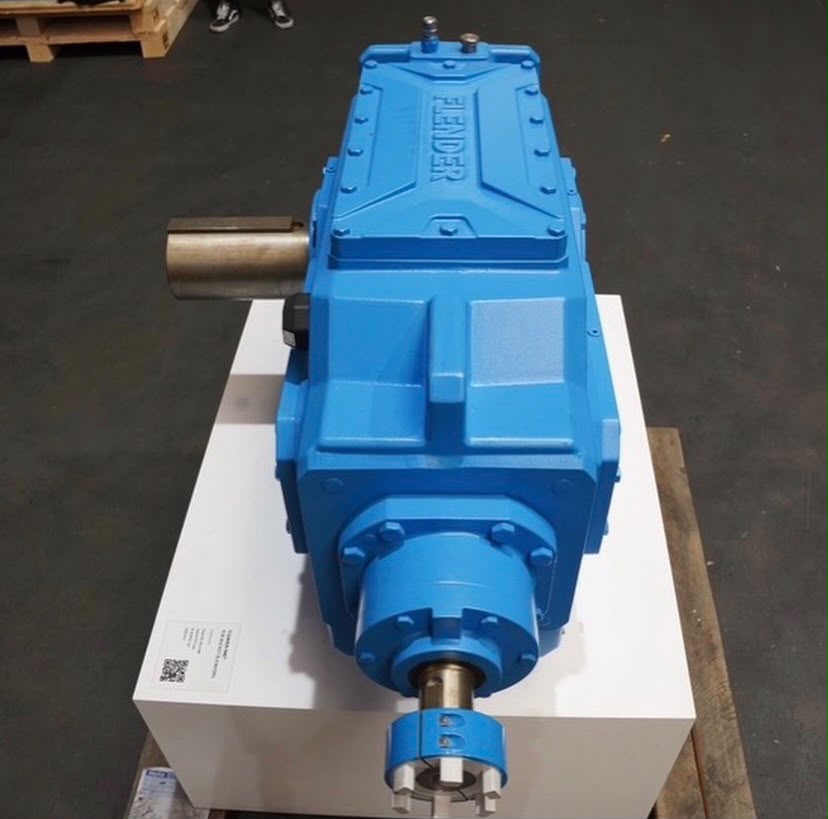
While the rocket engine primarily demonstrates complexity and size, our project for Flender illustrates the weight advantage particularly well. The original gearbox weighs about a ton. For trade shows, showrooms, and rotating presentations, this would involve significant transport and setup effort.
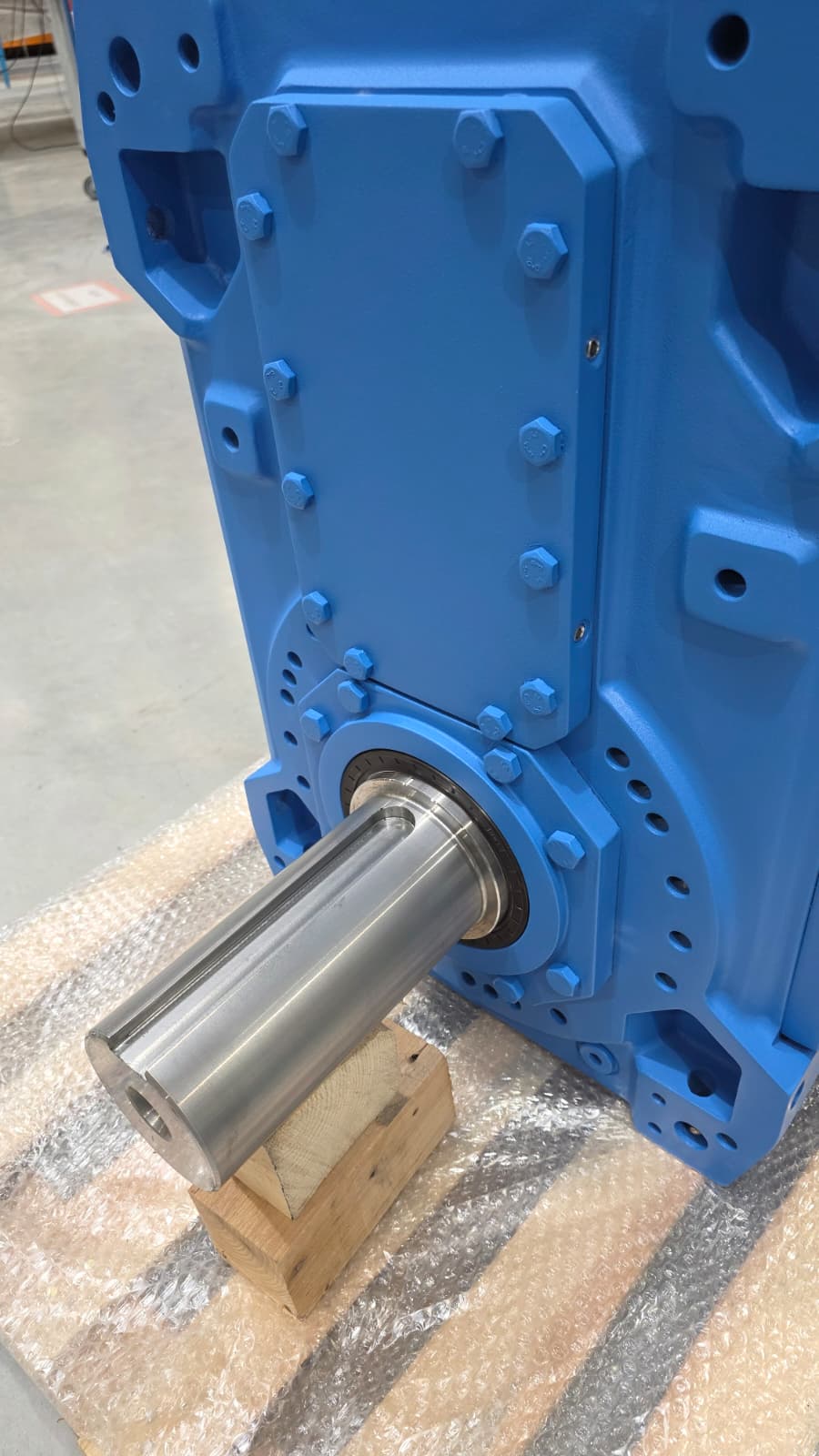
For Flender, we produced two true-to-detail gearboxes as large-format 3D-printed exhibits for indoor use. These were explicitly not meant to be roughly simplified display pieces. Gears, shafts, contours, and the technical design language were intended to preserve the recognizability and impact of the original.
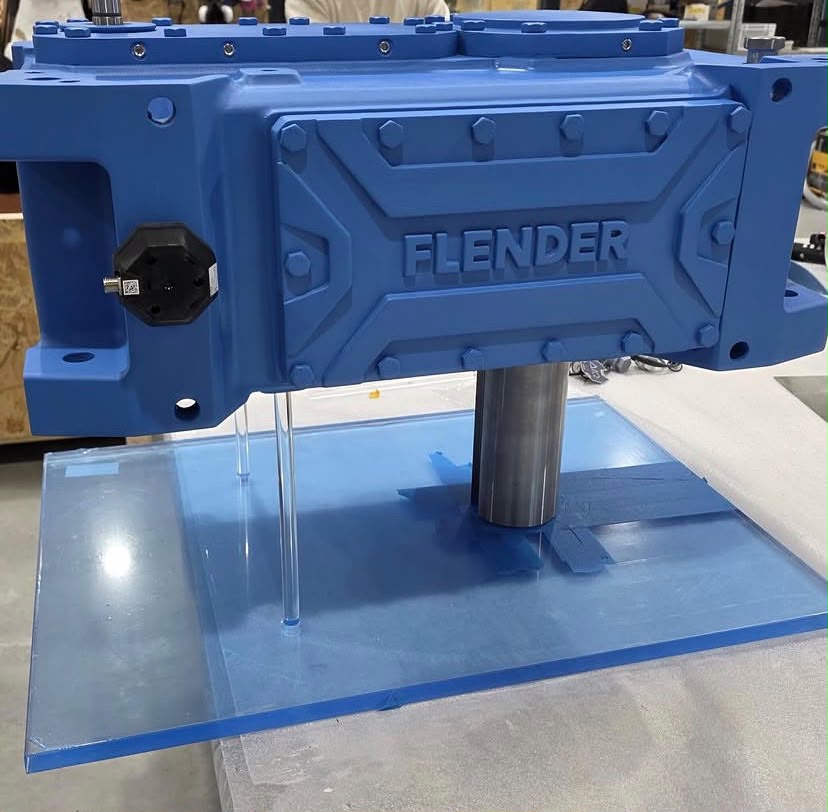
The finished exhibit measured 655 × 460 × 255 millimeters. By strategically combining different materials, we created a model that remained authentic and stable in all the right places: an acrylic glass panel weighed 9.8 kilograms, the large steel shaft 21.2 kilograms, the small steel shaft 1.0 kilogram, and the 3D-printed housing 16.3 kilograms. Together, this totals about 48.3 kilograms—instead of approximately one ton for the original.
This turned a technical heavyweight into a trade show exhibit that can be carried by two people. The benefit is immediate: less effort during transport, faster handling at the booth, and significantly more freedom in presentation—without losing the product's characteristic impact.
Finish, mounting, and transport are part of the exhibit
A convincing model does not end at the print bed. The gearboxes were carefully sanded, filled, and primed. They were then given a detailed paint job according to the customer's specifications. An acrylic glass mount ensured a secure and high-quality presentation. For shipping and storage, we also built a robust transport crate made of approximately 18-millimeter-thick OSB boards.
This interplay is crucial. A lightweight object is of little use if it gets damaged during transport, looks unstable at the booth, or looks like a raw print up close. Only through construction, finishing, presentation solutions, and packaging does a printed component become a professional trade show exhibit.
Which heavy products can be turned into lightweight trade show models?
Rocket engines and industrial gearboxes are spectacular examples, but they are by no means the only ones. In principle, this method is suitable wherever an original product is logistically difficult, too valuable, unavailable, or difficult for visitors to understand.
- Engines, turbines, and drive systems
Motors, generators, turbines, and complete powertrains can be created as exterior models, cutaway models, or partially transparent exhibits. Functional areas can be color-coded and specifically highlighted for sales presentations. - Mechanical Engineering and Heavy Industry
Pumps, compressors, rollers, couplings, valves, bearing housings, and other industrial components are often heavy and difficult to explain. A custom-made replica makes them portable and allows for a vivid presentation, even when the original remains installed in a production facility. - Construction, Agricultural, and Commercial Vehicle Technology
Large vehicle components, axles, hydraulic systems, buckets, or technical assemblies can be represented to scale or in full size. Particularly interesting details can be added separately as hand samples or enlarged functional models. - Energy, Infrastructure, and Process Engineering
Plant components from power stations, hydrogen technology, pipeline systems, or process plants are often unavailable at the actual site of operation. 3D-printed models can spatially explain complex relationships and make technical solutions visible to customers, investors, or professional audiences. - Products that are not yet ready for series production
Pre-series products and developments can also be created as physical presentation models. If only digital design data is available initially, 3D printing enables a compelling presentation before the actual product is available. Confidential or functionally critical interior areas can be deliberately simplified or omitted.
How to create a lightweight, true-to-original trade fair exhibit
Understanding the goal and application
The starting point is not the question of what can be printed at maximum capacity, but what the exhibit is intended to achieve. Should it generate attention, explain a function, serve as a photo opportunity, or support a sales pitch? Where will it be used, how close will the audience get, and how often will it be transported?
Checking and preparing data for presentation
CAD data from the design phase is developed for manufacturing and function, not automatically for a trade fair model. Wall thicknesses, details, cavities, sensitive geometries, and segment boundaries must be adapted for printing and subsequent use. If no finished data is available, renderings, scans, drawings, or other templates can serve as a starting point depending on the project.
Planning weight, segmentation, and assembly
The exhibit is designed so that individual segments are printable, transportable, and securely mountable. Material usage and reinforcements are provided exactly where they are needed. Additions made of metal, acrylic glass, or other materials can increase authenticity and stability without taking on the full weight of the original.
Large-format printing and professional finishing
After production, segments are joined and transitions are cleanly finished. Sanding, filling, priming, and painting ensure that the object does not look like an unfinished 3D print. Colors, gloss levels, labels, and effect surfaces are matched to the original and the intended presentation.
Considering presentation and transport
Bases, mounts, attachment points, and transport crates are not an afterthought. They determine whether the exhibit can be set up quickly on-site, displayed safely, and stored securely between multiple uses. That is why we always consider the object in conjunction with its future application.
Deceptively real means: convincing for the purpose
A trade fair model is not about imitating every gram and every function of the original. What matters is visual and communicative credibility. Visitors should be able to recognize the product, understand its dimensions, and grasp the technical features that are important for the conversation.
To achieve this, we combine digital manufacturing with expert surface finishing. Large-format 3D printing provides the shape and volume. Post-processing eliminates distracting seams. The paint finish creates material impact, depth, and brand relevance. Real components can be integrated where they enhance the message. The result is an exhibit that weighs significantly less while still fulfilling exactly the purpose the customer needs.
This precision is especially important at trade fairs. The audience quickly spots technical inconsistencies. That is why you need a partner who can not only print on a large scale but also understands technical data, follows design decisions, and brings together the requirements of trade fair construction, marketing, and sales.
Thinking more economically than just until the first day of the trade fair
Producing a custom trade fair model is an investment. However, its value is not just seen at its first use. A well-planned exhibit reduces recurring transport and assembly hurdles, can be used at various locations, and remains part of your communication for years.
After the trade fair, it can move to the showroom, be used for client meetings, utilized for training, or presented at recruiting and press events. Photos and videos of the object further extend its reach into digital channels. A logistical solution thus becomes a versatile communication tool.
Why Creative Polymer?
Because a convincing industrial exhibit requires more than just a large printer. It takes technical understanding, reliable processes, experience with large geometries, and a workshop that turns printed parts into presentation-ready objects.
Creative Polymer combines large-format 3D printing with data verification, model adjustment, segmentation, assembly, professional post-processing, and high-quality painting. If required, we develop suitable bases, mounts, and transport solutions. Tight deadlines are also part of our project routine – the Storm engine, which was created as a full-scale model within eight days, is impressive proof of this.
We don't just make lightweight copies. We develop exhibits that work at trade fairs: visually striking, technically credible, transportable, and tailored to the customer's specific needs.
Bottom line: The product remains heavy. Its presentation becomes light.
Not every multi-ton product needs to travel itself to make an impression at a trade fair. A detailed 3D-printed trade fair model can convey the dimensions, shape, and technical message of the original while drastically reducing weight, logistics, and handling.
The Storm rocket engine shows how complex aerospace technology can be made tangible in its original size. The Flender gearbox shows how a roughly one-ton unit becomes a portable exhibit weighing about 48.3 kilograms. In between lie countless possibilities: engines, turbines, machines, vehicle parts, plant components, and products that have previously only existed digitally.
Turning heavy into light – without taking the impact of the original lightly.
What our customers say
Request a project
Let's

together
If you would like to have your own custom XXL object, trade fair exhibit, or promotional item created using 3D printing, we can print it for you professionally.
Creative Polymer
Am Hellweg 5
44805 Bochum



Copyright © Creative Polymer
Realized by famesites

